
Georgetown · Motorcycle Accident
Georgetown Motorcycle Accident Lawyer
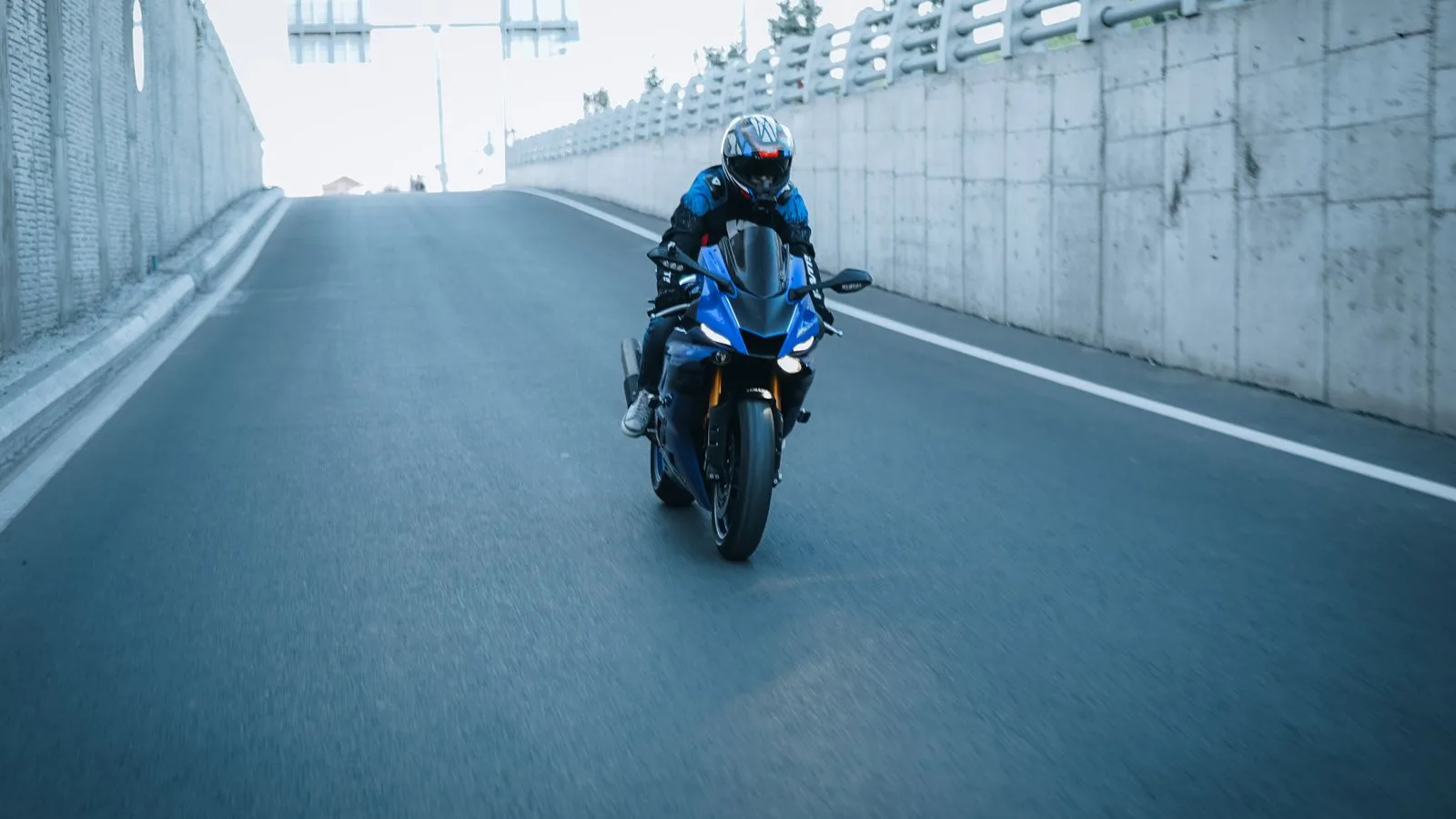
A motorcycle accident claim in Georgetown is a personal injury case where a motor vehicle strikes or forces off the road a motorcycle rider on corridors such as Williams Drive, SH-29, or the I-35 stretch running past the San Gabriel river crossings. Texas does not operate a no-fault system, so the rider must establish the driver's negligence and navigate the Chapter 33 comparative-fault bar that defense insurers exploit through anti-motorcycle jury bias. Williamson County district courts on the Georgetown square handle these cases, and the two-year limitations window under Tex. Civ. Prac. & Rem. Code § 16.003 applies. Because riders have no protective frame around them, injuries are typically more severe than in a vehicle-vs-vehicle collision, and the damages build accordingly.
Why Georgetown cases are different
Georgetown's mix of higher-speed I-35 lanes, the river-crossing sight lines on the San Gabriel, and the left-turn density of Williams Drive makes it a hard environment for riders. Motorcycle cases here fight an extra battle: the reflexive assumption that the rider must have been at fault.
Beating rider bias under Texas comparative fault
Insurers and some jurors carry an unspoken assumption that a motorcyclist was speeding, weaving, or otherwise reckless, and under Chapter 33 proportionate responsibility every point of fault shifted onto the rider directly reduces or, past fifty-one percent, eliminates recovery. That bias is exactly what a Georgetown defense will lean on. The most common crash here is the left-turn collision, where a driver turning across Williams Drive or onto SH-29 fails to see an oncoming bike and claims the rider 'came out of nowhere.' We counter that framing with hard evidence: intersection-camera footage where the square or a commercial lot has it, EDR data from the turning vehicle showing its speed and turn timing, scene measurements, and where appropriate a human-factors analysis of sight lines and perception-reaction time. The goal is to replace the stereotype with a documented reconstruction the adjuster cannot wave away.
Severe injuries and the local road hazards behind them
A rider has no crumple zone, so the same impact that bruises a driver leaves a motorcyclist with orthopedic trauma, road rash, internal injuries, or a head or spinal injury. Georgetown's specific hazards compound that exposure: the elevation changes and early-morning fog around the San Gabriel river crossings on I-35 create sight-distance problems, the lane drops at the SH-130 split and Williams Drive interchange force abrupt speed changes, and angled parking and backing movements around the historic square create low-speed conflicts that are still dangerous on two wheels. Riders thrown from a bike are commonly transported to St. David's Georgetown on Wolf Ranch Parkway, with higher-acuity trauma diverted to Ascension Seton Williamson in Round Rock or Dell Seton in downtown Austin. Because the injuries trend severe, future-care and lost-earning components often carry the value of the case, and those have to be developed early.
More in Georgetown
Other ways we help Georgetown injury victims.

Frequently asked
Georgetown motorcycle accident questions
- No. A driver's duty includes looking for and yielding to oncoming traffic, and motorcycles are oncoming traffic. 'I didn't see the bike' describes a failure to keep a proper lookout, not a defense. We use intersection footage, the vehicle's EDR turn-timing data, and sight-line analysis to show the rider was visible and the driver simply failed to yield, which is the core of most left-turn motorcycle cases here.
- It can be raised, but it does not automatically bar recovery. Texas comparative fault looks at conduct that contributed to the harm, and a helmet question is generally relevant only to head-injury damages, not to who caused the crash. For orthopedic, internal, or non-head injuries it has little bearing. We keep the focus on the driver's negligence, which is what determines liability.
- With data instead of stereotype. EDR downloads, scene evidence, camera footage, and reconstruction establish actual speeds and the sequence of events. On the higher-speed Georgetown I-35 stretch and the river crossings, that documentation matters even more, because impact dynamics get blamed on the rider. Showing the rider's actual speed and the other driver's movement neutralizes the bias before it reaches a Williamson County jury.
- The left-turn intersections along Williams Drive and SH-29 account for a high share of rider crashes because prevailing vehicle speeds are enough to cause severe injury when a driver fails to yield. The I-35 lane drops at the SH-130 split and at Williams Drive create abrupt speed compression that catches riders unprepared, and early-morning fog around the San Gabriel river crossings on I-35 reduces sight distance. Each location produces a different evidence picture, which is why scene-specific reconstruction matters.
- Fog reduces visibility but does not eliminate a driver's duty to keep a safe following distance and drive at a speed appropriate for conditions. If a driver rear-ended you or crossed your lane in low-visibility conditions, their failure to adjust speed or maintain awareness is a form of negligence. Weather and visibility conditions are documented through law-enforcement reports, nearby weather stations, and testimony, and they can strengthen, not weaken, a liability narrative.
- Emergency-room records are the foundation of the injury chronology and the starting point for causation. If the ER discharged you with a soft-tissue diagnosis that later proves to be more serious — a disc injury or a fracture that was not immediately visible — the follow-up imaging that establishes the true diagnosis is what drives the damages. We make sure the post-ER imaging and clinical course are fully documented before any offer is evaluated.
Where we work from
Downtown Austin. Georgetown clients welcome.
Our office is in downtown Austin; we represent Georgetown-area clients statewide and travel to Georgetown for case-specific needs (scene visits, medical-records consultations, court appearances). Home and hospital visits when injuries make travel difficult.
Talk to a Georgetown motorcycle accident lawyer.
Free case review, no obligation. We'll tell you straight whether we can help.