
Car accidents · Subcategory
Rear-End Collision Lawyer in Texas
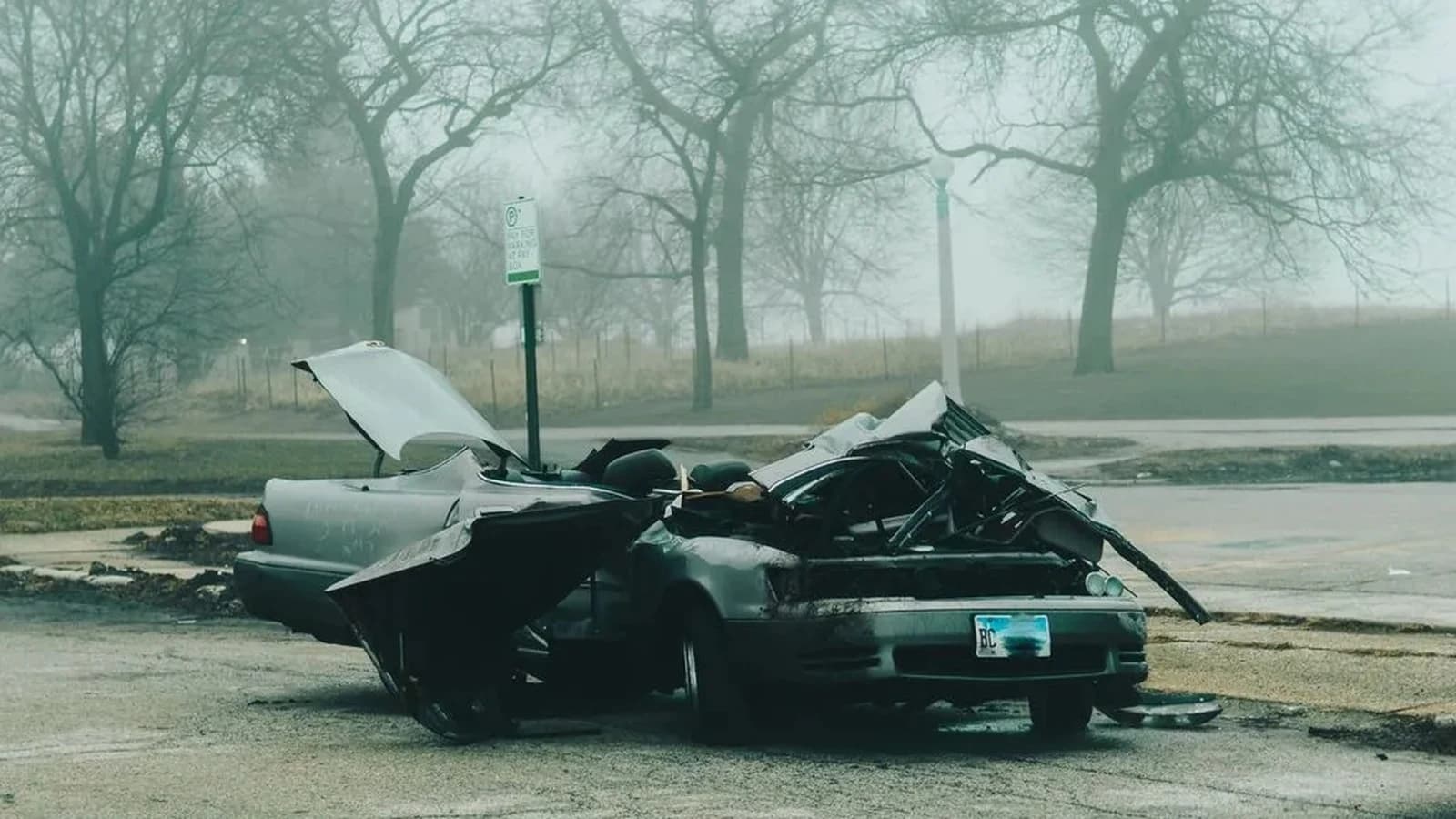
A rear-end collision is a crash where the trailing driver strikes the back of the vehicle ahead. Under Texas case law, the following driver is presumed negligent because the duty to maintain a safe following distance and proper lookout rests with them. That presumption is rebuttable, but in practice it shifts the conversation from whether the rear driver is liable to how much the claim is worth.
How a typical Austin rear-end crash unfolds
The pattern is consistent across MoPac, US-183, and the I-35 frontage roads: traffic surges and stalls without warning, the lead driver brakes hard for a slow-down or a lane merger, and the trailing driver, eyes on a phone or simply driving too close, fails to stop in time. Speeds at impact are often modest (15-35 mph), which is exactly why insurers later argue the claim is overstated. The medical record tells a different story.
The injuries that actually drive value
Whiplash is the headline diagnosis but rarely the real injury. What we see in our clients' MRIs is cervical strain that masks a disc bulge, lumbar facet irritation, shoulder labral tears from the seatbelt, and concussions in clients who don't realize they hit their head on the headrest. Symptoms often peak at week two to four, well after the adjuster's first lowball offer. Soft-tissue cases settle for soft-tissue numbers; documented disc and neurological injury cases settle for many multiples more.
The Texas presumption of fault and how insurers attack it
Texas courts have long held that a rear-end collision creates an inference of negligence against the following driver (see e.g. Pearson v. DeBoer, 99 S.W.3d 273). The defense playbook is narrow: argue a sudden and unexplained stop by the lead driver, argue brake-light failure, or argue a third vehicle pushed the defendant forward in a chain reaction. None of these defenses succeed on a phone call; they require a sworn statement, photographic evidence of the vehicle, and often a download of the event data recorder.
When policy limits are the real ceiling
Most rear-end claims are not won or lost on liability. They are won or lost on coverage. Texas minimum liability is $30,000 per person, a number that disappears the moment surgery is on the table. We work the file to identify every available policy: the defendant's primary, any umbrella, your own UM/UIM, household resident coverage, and (if the at-fault driver was working) the employer's commercial policy. A claim worth $250,000 against a $30,000 policy is a different problem than the same claim against a $1,000,000 policy, and the strategy has to match.


Frequently asked
Questions Texas accident victims ask us
- Almost always, but not automatically. Texas courts treat a rear-end impact as evidence the trailing driver was negligent, failing to keep a proper lookout or maintain a safe following distance. The presumption can be rebutted (a sudden unexplained stop, a non-functioning brake light, a third car pushing the rear driver forward) but the burden shifts to the defense to prove it, which is a much harder posture for the insurer than starting from neutral.
- That is the most common defense and it almost never wins on its own. Texas drivers are required to anticipate that traffic ahead may stop suddenly; that is the entire point of the safe-following-distance rule. The defense usually has to combine the sudden-stop argument with something else (a brake-checking allegation, a non-working brake light, a witness) to move the needle. If it is just their word against yours, the presumption stays with you.
- No. Delayed onset is the rule rather than the exception in rear-end collisions. Adrenaline and inflammation mask soft-tissue and disc injuries for 24 to 72 hours, and disc injuries often do not produce their full symptom picture for two to four weeks. What matters is getting evaluated as soon as symptoms appear and being honest in the record about the timing. We have settled significant cases where the client's first medical visit was a week after the crash.
- If photos show only minor bumper damage, the carrier will argue the forces involved could not have caused a real injury. This is a script, not a medical opinion. The biomechanics literature is clear that occupant injury at 10-25 mph rear impacts is well-documented, particularly cervical disc and facet injuries. The way to beat the low-impact argument is with the medical record itself: imaging findings, a treating physician's causation statement, and (in larger cases) a retained biomechanical or medical expert.
- Multi-vehicle chain rear-ends are common on MoPac and I-35 during rush hour. As the middle car, you are typically not at fault; the trailing driver's impact caused you to hit the lead vehicle. We pursue the rear-most at-fault driver's policy as primary, and we also evaluate any property-damage exposure you may have to the lead driver and how to defuse it. Coverage analysis is more complicated with three or more vehicles, but the liability story is usually clean.
- Yes, sometimes decisively. Footage from your own dashcam, the other driver's dashcam, a nearby business camera, or a TxDOT traffic camera can lock in the sequence of events before either driver's story shifts. If you have footage, preserve it immediately; back it up off the device. If you do not, we send preservation letters to nearby businesses and to TxDOT before the standard retention windows expire (often 30 to 90 days).
- Plan on six to twelve months for a clean soft-tissue case with a single defendant. Cases involving disc injury, surgical recommendations, commercial defendants, or multiple insurance layers run twelve to twenty-four months and sometimes longer. The honest answer is that the file is ready when the medical record is ready; settling before the medical picture is clear means leaving money behind, and we will not push a client to do that to close the file faster.
- Texas minimum liability is $30,000 per person and $60,000 per accident, numbers that are completely inadequate for any case involving imaging-positive injury or surgery. When the at-fault policy is minimal, the case turns on finding additional coverage: your own underinsured-motorist coverage, any umbrella policy on either side, household resident policies, and employer commercial coverage if the other driver was on the job. We have recovered well above the at-fault driver's policy limits by stacking these layers correctly.
Let's talk about your case.
Free case review, no obligation. We'll tell you straight whether we can help.