
Pedestrian & bicycle accidents · Subcategory
Hit by Car While Walking: Texas Pedestrian Cases
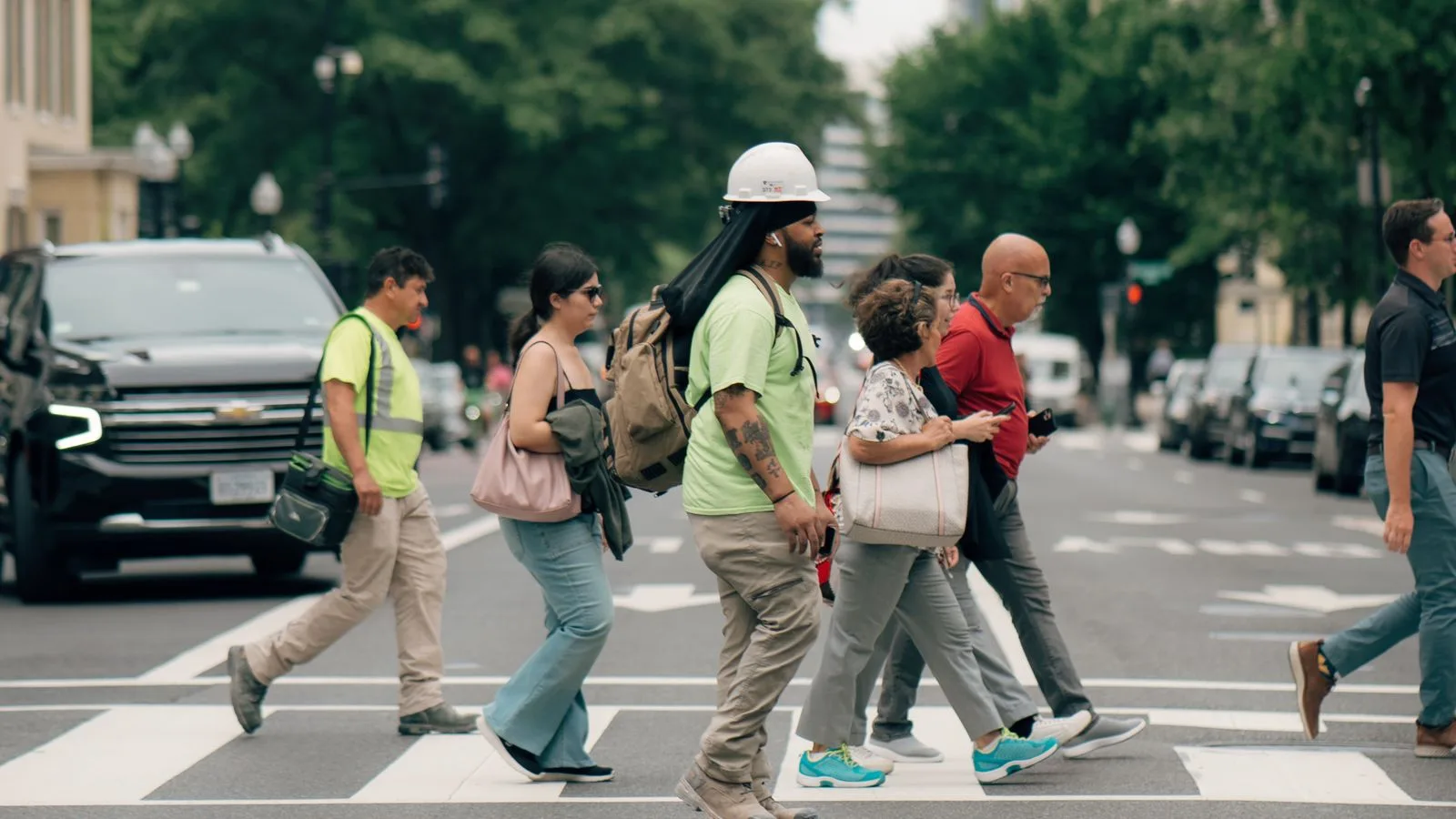
A 'hit by car while walking' case is a Texas pedestrian-injury claim where the strike occurred outside a crosswalk: mid-block, on a roadway shoulder, in a parking lot, or during a non-intersection crossing. The legal framework differs from a crosswalk case because the pedestrian's yield duty under Tex. Transp. Code § 552.005 sits on one side and the driver's due-care duty under § 552.008 sits on the other, with comparative fault doing more work than in clean crosswalk cases. These are very much winnable cases, but they are won on facts, not statute, and they require careful comparative-fault containment from day one.
How non-crosswalk pedestrian cases actually work in Texas
The defense entry point in any non-crosswalk case is § 552.005, which requires a pedestrian crossing outside a crosswalk to yield the right-of-way to vehicles. The defense uses the statute to anchor a comparative-fault percentage and to suggest the case is barred. Neither use is accurate. The yield duty creates a comparative-fault input, not a bar; recovery continues so long as the pedestrian's share stays at or below 50% under Tex. Civ. Prac. & Rem. Code § 33.001. And the driver's § 552.008 duty of due care operates independently: a driver with adequate distance, visibility, and time to react who nonetheless struck a pedestrian has failed that duty regardless of crosswalk status. The work of the case is to develop both sides of that balance with evidence.
Comparative fault containment in pedestrian cases
Comparative-fault percentages in non-crosswalk pedestrian cases are heavily fact-dependent. The defense will try to push the pedestrian's share toward 50% through any combination of: pedestrian intoxication, dark clothing at night, unexpected movement from between parked cars, headphones or phone use that suggested inattention, prior route history (was the pedestrian taking a shortcut they knew was dangerous?). Each input has a counter. Pedestrian intoxication is relevant only to the extent it affected the pedestrian's perception and response; impairment by itself doesn't establish negligence. Clothing visibility is a function of available lighting and the driver's lookout, not just the pedestrian's wardrobe. Phone or headphone use must connect to the actual perception failure to matter. Containing the comparative-fault percentage below the 51% bar is achievable in most cases, often well below 30-40% when the file is built right.
Driver lookout, distraction, and the closing-distance analysis
Most non-crosswalk pedestrian cases turn on the driver's lookout. A driver traveling at a reasonable speed in adequate lighting with normal forward attention can typically perceive and respond to a pedestrian entering the roadway with several seconds of warning, especially if the pedestrian is moving across the driver's normal field of view rather than appearing suddenly. When a strike happens despite that available perception-response window, the explanation is usually distraction — phone, in-vehicle screen, conversation, alcohol — or excessive speed for conditions. We work the file to develop the distraction case: cell-phone records, in-vehicle infotainment data, witness testimony about the driver's pre-impact behavior, and (where applicable) commercial vehicle event data and dashcam footage.
Parking lots, private roads, and non-roadway strikes
A meaningful share of pedestrian strikes happen outside the Transportation Code's roadway framework: in parking lots, parking garages, apartment complexes, gas station forecourts, and private roads. The Transportation Code yield duties don't technically apply to private property, but common-law negligence and the general duty of due care do. Premises-liability theories may add a defendant where the property owner failed to maintain reasonable design (poor lighting at a pedestrian-vehicle conflict point, inadequate striping, missing stop signs at internal intersections, sightline obstructions from landscaping or signage). Parking-lot cases are often run on both negligence and premises-liability theories, with the property owner's commercial general-liability coverage stacking with the driver's auto policy.

Frequently asked
Questions Texas accident victims ask us
- Often yes, even though the legal posture is harder than a crosswalk case. Tex. Transp. Code § 552.005 requires a pedestrian crossing outside a crosswalk to yield to vehicles, but the driver retains the duty of due care under § 552.008. Recovery turns on the comparative-fault allocation between the pedestrian's failure to yield and the driver's lookout, speed, or distraction. As long as the pedestrian's share stays at or below 50%, recovery continues, reduced by the pedestrian's percentage of fault.
- It is relevant evidence but not an automatic bar. The defense will argue impairment contributed to the pedestrian's failure to perceive or respond to the oncoming vehicle, and the comparative-fault percentage may reflect some allocation. Texas case law focuses on whether the impairment actually affected the pedestrian's conduct; being legally impaired without a connection to the strike itself carries less weight than impairment that explains the specific failure to yield or to see. The driver's own conduct remains the larger factor in most fact patterns.
- Several evidentiary categories. Cell-phone records from the carrier show call and text activity around the time of the strike; these are obtainable by subpoena or preservation letter and often resolve the distraction question definitively. App-usage data from the driver's smartphone, where preserved, shows engagement with social media, music, navigation, or messaging apps. In-vehicle infotainment data on newer vehicles captures touchscreen interactions. Witnesses driving behind or alongside the at-fault vehicle may have observed the driver's head position or phone use. We pursue all of these as part of the standard investigation in any distracted-driving pedestrian case.
- Similar but not identical. The Texas Transportation Code provisions about crosswalks and right-of-way are technically roadway provisions and don't apply directly to private property. Common-law negligence does: drivers in parking lots and private roads still owe a duty of due care, and a driver who failed to maintain a reasonable lookout in a foreseeable pedestrian environment is liable on negligence principles. Parking-lot cases often add a premises-liability theory against the property owner for inadequate design — poor lighting, missing stop signs, sightline obstructions — which opens an additional defendant and coverage layer.
- It is one input among many. Texas law does not require pedestrians to wear high-visibility clothing, and a pedestrian in dark clothing is not negligent as a matter of law for that fact alone. The relevance of clothing depends on the available lighting at the crossing point, the driver's headlight illumination, the pedestrian's position relative to the driver's normal forward attention, and the speed of the closing vehicle. A driver with adequate headlights at a reasonable speed has enough perception-response time to detect a dark-clothed pedestrian in most lighting conditions. Forensic-lighting analysis frequently neutralizes the dark-clothing argument.
- Under Tex. Civ. Prac. & Rem. Code § 33.001, a plaintiff whose share of fault exceeds 50% recovers nothing; that is the 51% bar. At or below 50%, the plaintiff recovers damages reduced by the plaintiff's percentage of fault. In a non-crosswalk pedestrian case, the entire negotiation often revolves around where the comparative percentage lands. A case with a 25% pedestrian share and a $400,000 damages picture pays $300,000 net; the same case at 55% pays zero. Containing the percentage matters as much as proving damages in these files.
- Yes, in two ways. Uninsured/underinsured-motorist coverage on the pedestrian's auto policy generally extends to them as a pedestrian struck by a motor vehicle, even though they weren't in a vehicle at the time. UM coverage applies when the at-fault driver had no insurance; UIM applies when the at-fault driver's limits are insufficient to cover the damages. Personal Injury Protection (PIP) on the pedestrian's auto policy similarly extends to pedestrian injuries and pays medical bills regardless of fault. Stacking these coverages with the at-fault driver's policy is routine in serious cases.
- Driver-distraction evidence (cell records, app-usage data, in-vehicle infotainment data), the driver's pre-impact speed (often available from event-data-recorder data on newer vehicles), available lighting at the strike location (forensic-lighting analysis), independent witness statements about the pedestrian's movement and the driver's pre-impact behavior, surveillance footage from nearby businesses, and the responding officer's body-camera footage. The combination of distraction evidence and the speed-and-lighting analysis usually drives the comparative-fault allocation more than any single piece of evidence on its own.
Let's talk about your case.
Free case review, no obligation. We'll tell you straight whether we can help.