
Truck accidents · Subcategory
18-Wheeler Accident Lawyer in Texas
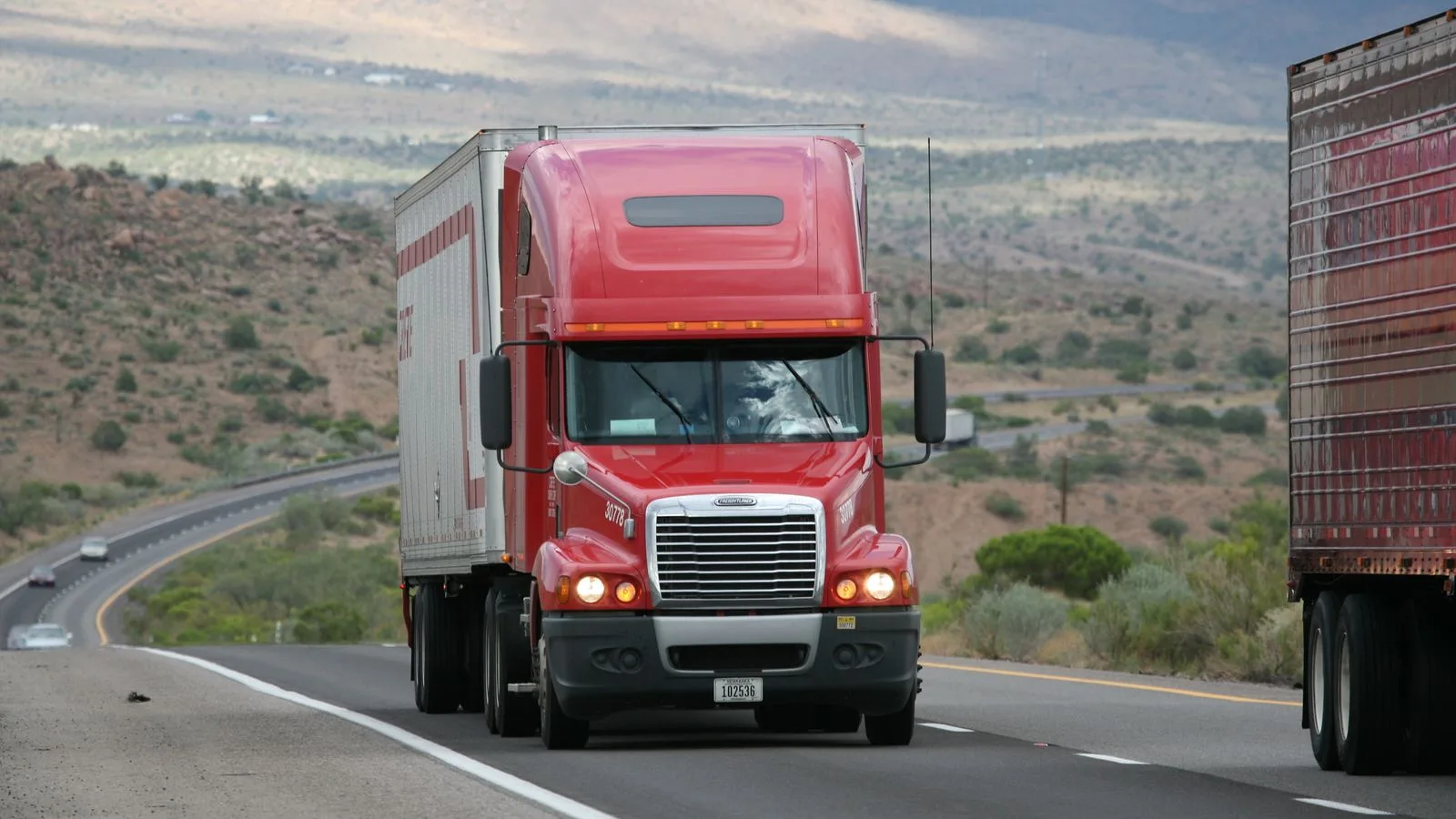
An 18-wheeler crash is a collision involving a tractor-trailer regulated by the Federal Motor Carrier Safety Administration (FMCSA). These cases sit on top of the ordinary Texas negligence rules but add a second body of federal law, the Federal Motor Carrier Safety Regulations (49 CFR Parts 350-399), that governs the driver, the carrier, the equipment, and the paperwork behind every loaded mile. Done right, a tractor-trailer case is built on the regulations, the electronic data inside the truck, and the chain of corporate decisions that put that driver in that cab on that day.
Why an 18-wheeler case is not a car-accident case with bigger trucks
The vehicle is heavier — 80,000 pounds loaded versus a passenger car at roughly 4,000 — and the physics alone explain catastrophic injury patterns. But the legal substance is different too. The driver answers to FMCSA hours-of-service rules, drug-testing rules, and licensing rules. The carrier answers to vehicle-inspection rules, driver-qualification-file rules, and supervision rules. The trailer, the load, the maintenance shop, and the broker each have their own duty layer. A demand letter that treats the file as a fender-bender with a bigger insurance policy leaves most of the recoverable value on the table.
Respondeat superior and the carrier's direct negligence
Texas recognizes both vicarious liability (the carrier is liable for its driver's on-the-job negligence under respondeat superior) and direct liability (the carrier is liable for its own negligent hiring, training, supervision, retention, and entrustment). Carriers often try to admit course-and-scope so the case settles on the driver's conduct alone, but a Texas plaintiff with documented direct-negligence evidence (a thin driver-qualification file, a missed road test, ignored prior crashes) is not required to abandon those theories. Both pleadings matter at trial and both matter at the negotiating table.
The data inside the truck
Modern tractors carry an engine control module (ECM), an event data recorder (EDR), an electronic logging device (ELD) for hours-of-service, and often forward-facing and driver-facing cameras. The ECM and EDR capture speed, RPM, throttle position, brake application, and hard-brake events in the seconds before impact. ELDs document the driver's duty status against FMCSA Part 395 limits. None of this data is preserved by default; federal regulation requires the carrier to keep certain records for finite periods (six months for ELD records under 49 CFR § 395.8(k)) and after that the carrier can lawfully overwrite. Preservation letters in the first week are not optional.
Insurance layers and the federal minimum
Interstate motor carriers hauling general freight must carry at least $750,000 in liability under 49 CFR § 387.9; carriers hauling hazardous materials carry $1 million to $5 million depending on the cargo class. Most large carriers stack a primary policy with multiple layers of excess coverage above it, and a carrier hauling for a Fortune 500 shipper may sit under additional vendor-required coverage. Identifying every available tower — primary, excess, MCS-90 endorsement, broker contingent, shipper additional-insured — is half the recovery work in any serious 18-wheeler case.






Frequently asked
Questions Texas accident victims ask us
- Three layers stack on top of normal negligence. First, the Federal Motor Carrier Safety Regulations create extra duties for the driver and the carrier (hours of service, vehicle inspection, driver qualification, drug testing). A violation is admissible as evidence of negligence under Texas law. Second, the carrier itself has direct liability for hiring, training, and supervision decisions, not just vicarious liability for the driver. Third, the available insurance is substantially higher (federal minimum of $750,000 for general freight versus Texas's $30,000 passenger minimum), and serious cases often involve multiple stacked layers of excess coverage worth millions.
- ECM and EDR data can be overwritten by continued operation of the tractor. ELD records are required to be kept for six months under 49 CFR § 395.8(k) and then lawfully purged. Driver-facing and forward-facing camera footage from carrier telematics is often retained for only 30-90 days unless flagged. Dispatch records, load tenders, and weight tickets cycle quickly. The first preservation letter, sent in the first week with specific record categories named, is the difference between a documented case and a he-said-she-said case.
- Both. Under Texas respondeat superior, the motor carrier is vicariously liable for the driver's negligence committed in the course and scope of employment. Independently, the carrier is directly liable for its own negligence in hiring an unqualified driver, failing to train, failing to supervise hours of service, failing to maintain the equipment, or retaining a driver after warning signs. Carriers sometimes try to admit course-and-scope to shut down the direct-negligence claim. Texas plaintiffs can and should resist that maneuver in cases with real direct-negligence evidence.
- The Federal Motor Carrier Safety Administration is the federal regulator for interstate motor carriers. Its regulations (49 CFR Parts 350-399) govern driver hours, vehicle inspections, maintenance, driver qualification files, drug and alcohol testing, cargo securement, and insurance minimums. A documented FMCSA violation is not automatic liability, but Texas courts allow it as evidence of negligence per se or evidence of negligence depending on the rule. In practice, FMCSA violations move settlement value substantially because they move the carrier's trial risk.
- Two years from the date of injury under Tex. Civ. Prac. & Rem. Code § 16.003, the same statute that governs car accidents. The faster issue in trucking cases is evidence preservation, not the filing deadline; the discoverable record can be lawfully destroyed long before the two years run. Waiting until month 20 to retain counsel is one of the most expensive mistakes a trucking-crash victim can make.
- The MCS-90 is a federal endorsement attached to a motor carrier's liability policy that obligates the insurer to pay public-injury claims even if a coverage defense would otherwise exclude them, for example, if the truck was being operated outside the policy's stated use. It applies to for-hire interstate motor carriers and is designed to protect the public, not the insured. In cases with coverage disputes, the MCS-90 sometimes turns an uncovered claim into a paying claim. We check for it as a routine step.
- Yes, somewhat. Interstate carriers operate under federal FMCSA rules. Texas intrastate-only carriers fall under Texas Department of Public Safety regulations (37 TAC Chapter 4) which largely adopt the federal rules but with some Texas-specific exceptions, including different hours-of-service tolerances for certain Texas-only operations. The analysis still draws heavily on the federal framework, but a defense lawyer who argues 'we're intrastate so the federal rules don't apply' is partly right, and the Texas equivalents still apply.
- Most cases settle, but tractor-trailer cases are filed and tried more often than passenger-car cases for one reason: the dollar values involved make insurer trial calculations different. A serious-injury 18-wheeler file with strong FMCSA evidence and adequate coverage is a case the carrier knows will be tried by capable counsel if the offer is wrong. We file, we work the discovery, and we try cases where the offer does not match the evidence.
Let's talk about your case.
Free case review, no obligation. We'll tell you straight whether we can help.