
Killeen · Truck Accident
Killeen Truck Accident Lawyer
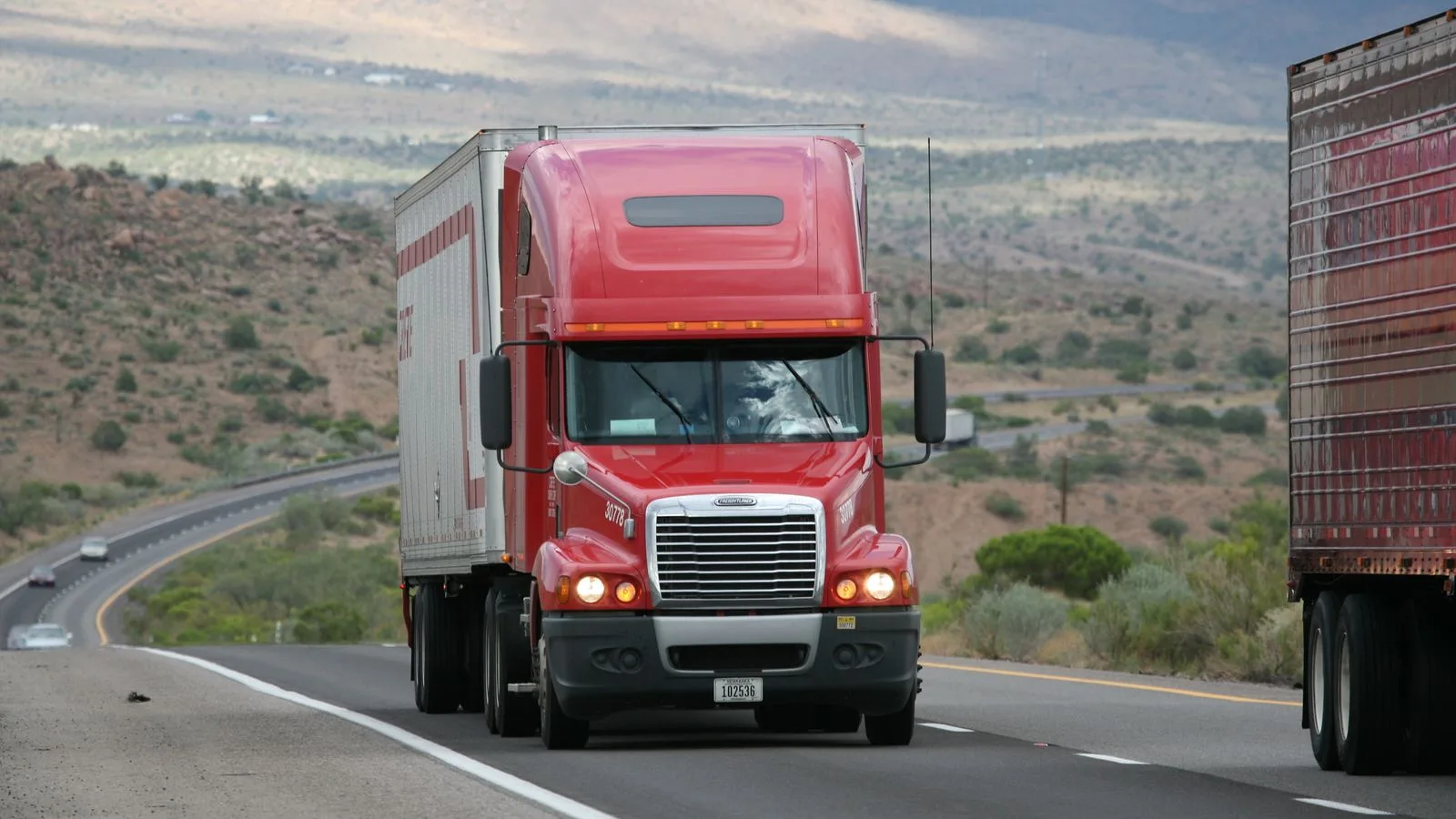
A commercial truck accident claim in Killeen involves a crash caused by a regulated carrier's tractor-trailer or heavy commercial vehicle on a Texas freight corridor, most commonly US-190 or the I-14 construction segments through Bell County. These cases are governed not just by Texas negligence law but by the Federal Motor Carrier Safety Regulations, which impose hours-of-service limits, driver qualification requirements, and maintenance obligations on carriers. The carrier, not just the driver, is often directly liable, and evidence unique to commercial operations — electronic logging device records, onboard telematics, qualification files — must be preserved immediately or it is lost.
Why Killeen cases are different
Killeen's freight moves along the US-190 / I-14 corridor that doubles as the Fort Cavazos commute, mixing 18-wheelers and commercial vehicles with dense shift-change traffic and active interstate construction zones, where commercial-carrier rules and higher policy limits change the case entirely.
Commercial carriers, FMCSA rules, and the corridor construction zones
When an 18-wheeler or commercial vehicle is involved, the case shifts from ordinary negligence to a layered analysis governed by the Federal Motor Carrier Safety Regulations. Hours-of-service limits, electronic logging device records, driver qualification files, and maintenance and inspection records all become evidence, and much of it can be overwritten or recycled on short retention cycles, so a preservation letter early in the case is critical. On the US-190 and I-14 segments where interstate upgrade work narrows lanes, a fatigued or distracted commercial driver entering a construction merge zone in the same stop-and-go traffic that fills the corridor at shift change is a recurring danger. The truck's ELD and any onboard telematics often show speed and braking in the seconds before impact, which is why securing that data quickly matters as much as the crash report.
Employer liability and the larger commercial policy
Commercial trucks usually carry far higher liability limits than the private passenger policies common around the post, which means the recovery can match a serious injury rather than being capped by an out-of-state driver's minimum coverage. Beyond the driver, the motor carrier that employed them can be directly liable for negligent hiring, training, supervision, or for dispatching a driver in violation of hours-of-service rules. Brokers, shippers, and maintenance contractors sometimes share responsibility as well. Identifying every responsible entity early shapes both the preservation strategy and the settlement posture. In Killeen, where a crash may involve a soldier or dependent on an out-of-state plate hit by a commercial rig, the contrast between the small personal policy and the carrier's commercial coverage is often the difference that makes full compensation realistic.
More in Killeen
Other ways we help Killeen injury victims.



Frequently asked
Killeen truck accident questions
- Commercial carriers are governed by the Federal Motor Carrier Safety Regulations, which create evidence that does not exist in a car case: hours-of-service logs, electronic logging device data, driver qualification files, and maintenance records. The carrier itself can be liable beyond the driver, and commercial policy limits are typically much higher. That changes both the investigation and the potential recovery.
- Quickly. ELD data, onboard telematics, and dashcam footage often cycle on short retention windows, and routine records can be overwritten. A spoliation or preservation letter sent to the carrier early in the case helps lock down the logs, the driver file, and the maintenance history before they disappear. The sooner counsel is involved, the more evidence survives.
- Usually both the driver and the motor carrier that employed them. The carrier can be directly liable for negligent hiring, training, or supervision, or for dispatching in violation of hours-of-service rules, and its commercial policy generally carries far higher limits. Brokers, shippers, and maintenance vendors can sometimes share fault as well, which we evaluate at intake.
- Yes, if the facts support it. Under Tex. Civ. Prac. & Rem. Code § 41.003, gross negligence requires showing objective extreme risk and the defendant's subjective conscious indifference. A carrier that dispatched a driver with documented hours-of-service violations, falsified logs, or a known qualification gap may meet that standard. Gross negligence opens the door to exemplary damages beyond actual losses.
- In the Bell County district courts in Belton, unless venue analysis points elsewhere under Tex. Civ. Prac. & Rem. Code § 15.002. Commercial truck cases are venue-flexible because the carrier often does business statewide, but for a crash in Killeen, Bell County is typically the natural home. The same two-year statute of limitations under § 16.003 applies.
- No. Under Chapter 33 proportionate responsibility you can recover as long as you are fifty percent or less at fault, and your recovery is reduced only by your assigned percentage. The carrier will typically try to inflate your fault share to reduce or eliminate exposure. The physical evidence — the truck's telematics showing speed and braking distance, the merge-zone layout, and witness accounts — is what counters that argument.
Where we work from
Downtown Austin. Killeen clients welcome.
Our office is in downtown Austin; we represent Killeen-area clients statewide and travel to Killeen for case-specific needs (scene visits, medical-records consultations, court appearances). Home and hospital visits when injuries make travel difficult.
Talk to a Killeen truck accident lawyer.
Free case review, no obligation. We'll tell you straight whether we can help.