
Laredo · Pedestrian Accident
Laredo Pedestrian Accident Lawyer
When a motor vehicle strikes a pedestrian or cyclist in Texas, the legal framework is built on the duties imposed by Tex. Transp. Code Ch. 552 (pedestrians) and the cyclist-as-vehicle rules at Tex. Transp. Code § 551.101, which give a bicycle operator the same rights and duties as a motor-vehicle driver. Drivers owe heightened duties at marked and unmarked crosswalks, in school zones, and around any vulnerable road user, duties that get violated daily in dense urban corridors and quiet suburban neighborhoods alike. The injury profile is severe by design: there is nothing protecting a person on foot or on a bike from a several-thousand-pound vehicle.
Why Laredo cases are different
Laredo pedestrian accident claims turn on Laredo-area roads, courts, and insurers, not generic statewide averages. Here is what shapes a pedestrian accident case in and around Laredo, and how Cap City handles it.
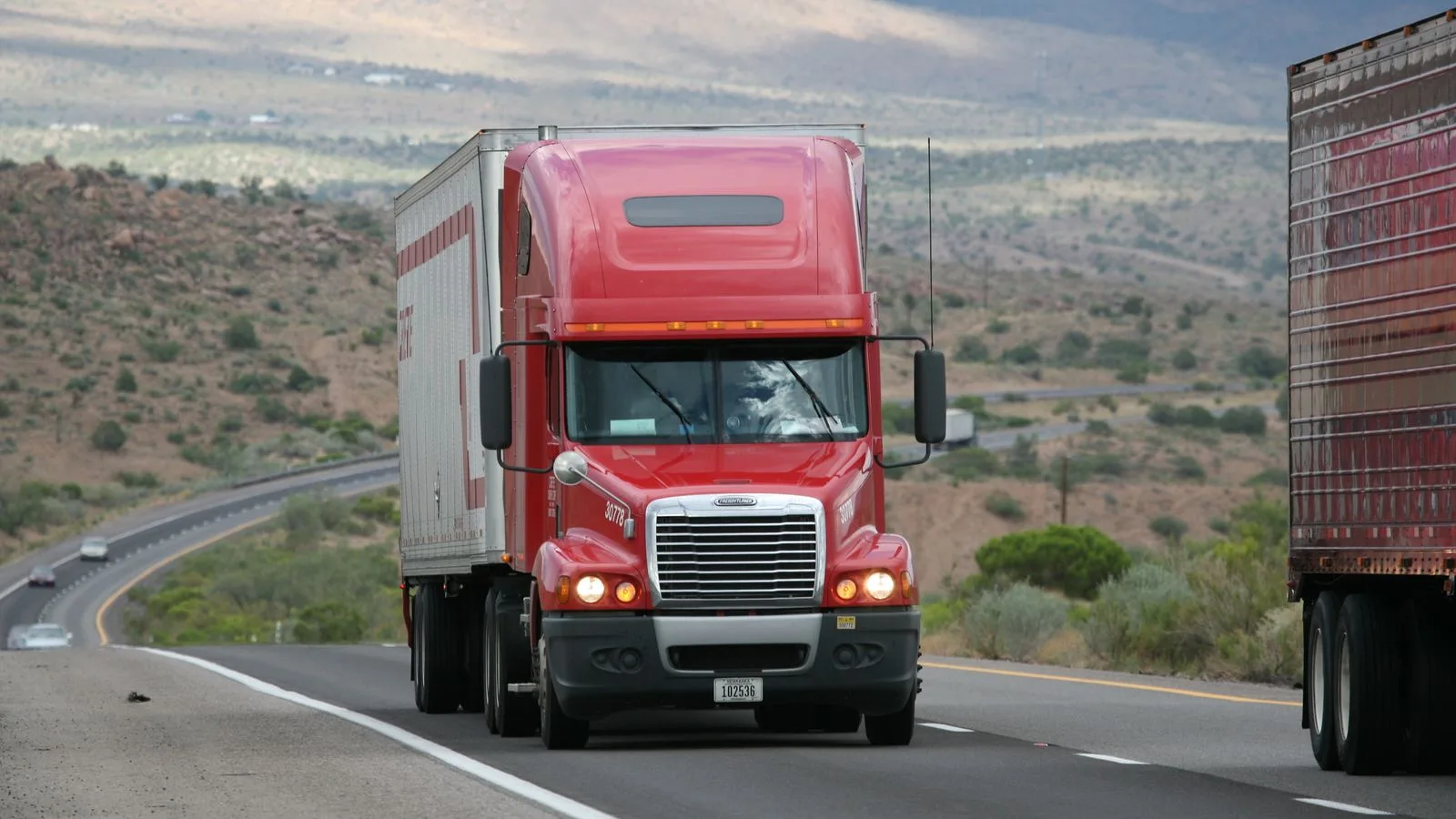
Freight geography is the whole story in Laredo. Northbound trucks clear the World Trade Bridge, then feed onto FM 1472 — Mines Road — the industrial artery lined with warehouses, customs brokers, and transfer yards that connects the crossing to Loop 20 and the I-35 on-ramps. Mines Road carries loaded tractor-trailers, empty bobtails circling back for the next load, and passenger cars belonging to the people who work in those warehouses, all in the same lanes. The result is a collision pattern that does not exist in most Texas cities: heavy-vehicle crashes on an arterial rather than on an interstate, at arterial speeds, with turning movements into and out of yard driveways. Loop 20 (the Bob Bullock Loop) is the eastern bypass and takes the overflow, concentrating merge and rear-end collisions at the I-35 and US-59 interchanges. US-59 runs east toward Freer and George West; US-83 runs the river line north toward Zapata and south into the older neighborhoods. Downtown, Gateway to the Americas and the Juárez-Lincoln bridges drop passenger and pedestrian traffic onto the surface grid around Convent Avenue and San Bernardo, where pedestrian-strike files cluster. Where a crash happened in Laredo tells you almost everything about who the defendant is going to be.
Serious-injury filings out of Laredo go to the Webb County district courts at the courthouse on Victoria Street: the 49th, 111th, 341st, and 406th, assigned by docket draw. Venue under Tex. Civ. Prac. & Rem. Code § 15.002 is proper where the events occurred or where the defendant resides, and for a crash inside Webb County that defaults to Webb County. The complication in this market is federal removal, and it is not a remote possibility; it is the base case for the freight files. The U.S. District Court for the Southern District of Texas, Laredo Division, sits here, and a defendant carrier headquartered in another state (or another country) with more than $75,000 in controversy has both the incentive and the standing to remove. Southern District scheduling, its local rules, and its expert-designation deadlines produce a materially different case timeline than a Webb County state docket. We run the removal analysis before the petition is drafted rather than after, because the answer changes how the pleading is built and which defendants are named first.



How we approach pedestrian accident cases
Crosswalk law and driver duties
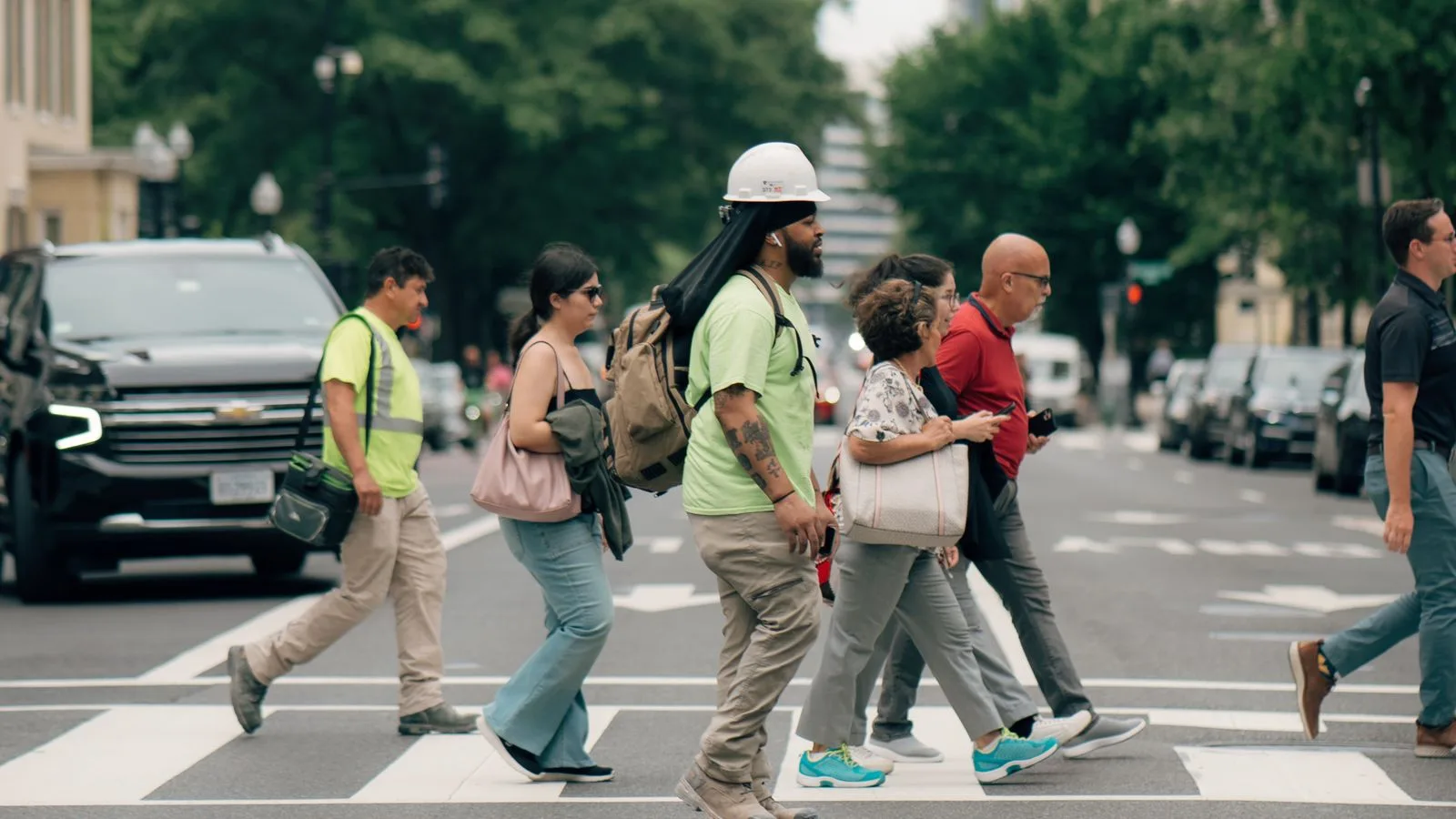
Tex. Transp. Code § 552.003 requires a driver to yield the right-of-way to a pedestrian crossing in a marked crosswalk, and at an intersection without traffic-control signals, in any part of the roadway. Drivers turning right on red or left on a green ball must yield to pedestrians lawfully in the crosswalk. School-zone duties are stricter: reduced speed limits, mandatory stops for crossing guards' signals, and statutory enhancements for moving violations. In practical terms, when a driver strikes a pedestrian in a crosswalk during a permitted crossing phase, liability is rarely a serious dispute. What is disputed is whether the pedestrian was 'in the crosswalk' and whether the driver had a fair chance to see and stop, questions that turn on signal timing data, camera footage, and witness accounts.
Bicycles, infrastructure, and the rules of the road
Under Tex. Transp. Code § 551.101, a person operating a bicycle has the rights and duties of a motor-vehicle driver. Riders generally must ride as near as practicable to the right curb (§ 551.103), with statutory exceptions for hazards, lane width, and turning movements, exceptions defense lawyers consistently understate. Many Texas cities, including Austin, have local ordinances on bike-lane use, dooring (the city of Austin prohibits opening a door into traffic without checking), and minimum passing distance for vehicles overtaking cyclists. The interaction between state law and local ordinance becomes outcome-determinative in city crashes; we read both into the file from day one.
Frequently asked
Laredo pedestrian accident questions
- Not automatically, but the legal posture strongly favors the pedestrian. Tex. Transp. Code § 552.003 requires drivers to yield the right-of-way to pedestrians lawfully in a marked crosswalk and at unsignalized intersections. When a driver strikes a pedestrian who was lawfully crossing during a permitted phase, the contested issues are usually narrow: whether the pedestrian was actually in the crosswalk and whether the driver had a fair chance to perceive and stop. Camera footage, signal-timing data, and witness statements usually resolve both quickly.
- You can still recover. Texas applies modified comparative fault with a 51% bar: if your share of fault is 50% or less, you recover damages reduced by your share. A pedestrian crossing mid-block bears some duty to yield to vehicles (Tex. Transp. Code § 552.005), but a driver always owes a duty of reasonable care and lookout. Cases involving mid-block crossings turn on speed, lighting, visibility, distraction, and whether the driver had time and distance to react. The fact that you were outside a crosswalk is not the end of the analysis.
- There is no statewide minimum-passing-distance law for cyclists, but several Texas cities, including Austin, have local ordinances requiring a minimum buffer (commonly three feet for cars, six feet for commercial vehicles) when passing a person on a bicycle. Violation of a local ordinance is evidence of negligence in a civil case. Outside ordinance jurisdictions, the general duty of due care still applies and unsafe passing remains a basis for liability.
- Texas drivers owe a heightened duty of care around children, who are recognized in the case law as unable to perceive and react to traffic the way adults can. School-zone speed limits under Tex. Transp. Code § 545.356 and the speed-limit reductions adopted by local authorities give an additional violation hook when a child is struck in a posted zone. Comparative-fault analysis against young children is constrained: Texas recognizes that children below certain ages cannot legally be assigned negligence at all.
- In the Webb County district courts at the courthouse in Laredo — the 49th, 111th, 341st, or 406th, assigned by docket draw — for any crash arising inside Webb County. The one that matters more in this market is the follow-up question: whether the case stays there. Freight cases with an out-of-state or foreign carrier and more than $75,000 in controversy are strong candidates for removal to the U.S. District Court for the Southern District of Texas, Laredo Division. We evaluate removal exposure before drafting the petition, because a federal timeline changes the case plan.
- Usually yes, but the analysis is different and it starts earlier. The first job is identifying every motor carrier in the chain: the drayage operator that moved the trailer across, the freight broker that placed the load, the trailer's owner or lessor, and the carrier of record on the Mexican side. Each has its own insurance. A policy written for a Mexican-domiciled carrier may exclude US losses or carry limits far below what an American claim is worth, which is exactly why the other parties in the chain matter so much. We do not accept a police report's identification of the responsible party as the end of the inquiry.
Where we work from
Downtown Austin. Laredo clients welcome.
Our office is in downtown Austin; we represent Laredo-area clients statewide and travel to Laredo for case-specific needs (scene visits, medical-records consultations, court appearances). Home and hospital visits when injuries make travel difficult.
Talk to a Laredo pedestrian accident lawyer.
Free case review, no obligation. We'll tell you straight whether we can help.