
League City · Pedestrian Accident
League City Pedestrian Accident Lawyer
Pedestrian and bicycle accident cases in League City rest on driver duties codified in Tex. Transp. Code Ch. 552 — drivers must yield to pedestrians in crosswalks — and on the cyclist-as-vehicle rules of Tex. Transp. Code § 551.101, which give a bike rider the same rights and duties as a motor vehicle operator. Strikes occur most often on the FM-518 and FM-2094 corridors and near the Kemah-Seabrook waterfront, where vehicle volume and pedestrian traffic overlap. Injuries are severe because no enclosure protects a person on foot or on a bike, and the two-year statute of Tex. Civ. Prac. & Rem. Code § 16.003 governs, with Galveston County district court as the venue.
Why League City cases are different
League City pedestrians and cyclists are most exposed where surface arterials meet heavy turning traffic: the FM-518 corridor through downtown, the SH-3 and Calder Drive intersections, and the Kemah-Seabrook waterfront where weekend foot traffic mixes with drivers heading back toward I-45.
Crosswalk, right-of-way, and driver inattention at League City intersections
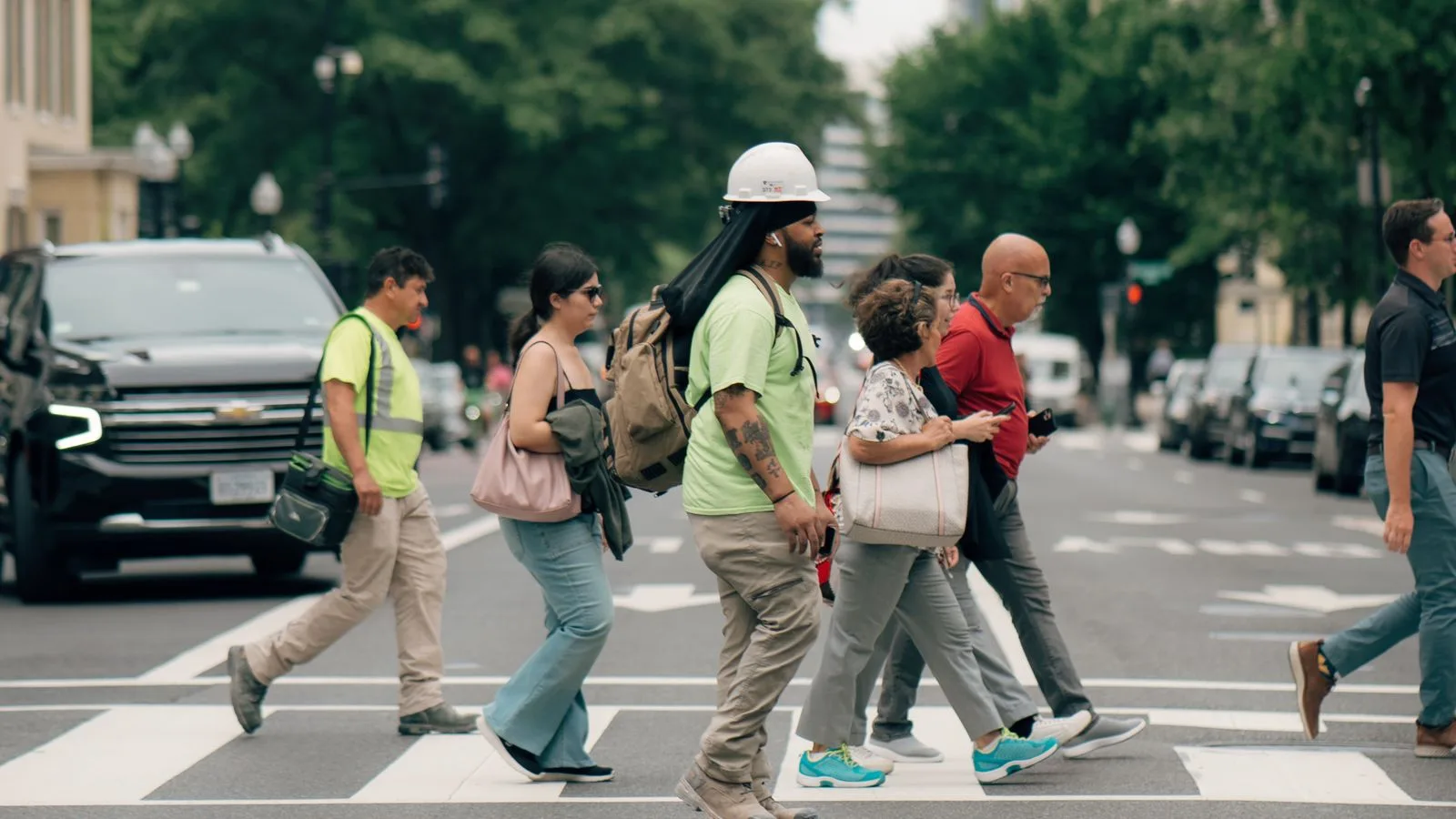
Texas law gives pedestrians the right of way in marked crosswalks and at unmarked crossings at intersections, and it obligates drivers to yield. The reality on FM-518 through the heart of League City, with recurring conflicts at SH-3, Calder Drive, and Walker Street, is that distracted and turning drivers strike people who were lawfully crossing. A right-turning driver scanning left for a gap in traffic, or a left-turning driver fixated on oncoming cars, often never sees the person in the crosswalk. Establishing right-of-way is the heart of these cases, and it usually rests on signal-timing logs, crosswalk markings, the point of impact, and any camera footage along the corridor. Driver inattention, including phone use, is a frequent thread. Because Texas uses proportionate responsibility, defenses commonly try to shift fault onto the pedestrian for the crossing location or clothing visibility, so documenting the lawful crossing and the driver's failure to yield early is what protects the claim.
Severe injuries and the waterfront and commuter traffic mix
A person on foot or on a bicycle has no protection against a vehicle, so even a moderate-speed strike near the Kemah waterfront or on a League City arterial can cause fractures, internal injuries, or a traumatic brain injury. The Seabrook-Kemah waterfront just east of League City draws weekend pedestrian volume onto FM-2094 and FM-518, and that same period sees a predictable DUI-related collision surge as drivers return toward I-45 Friday evening through Sunday. When a struck pedestrian's injuries are serious, the medical picture rarely resolves at the first ER visit; the orthopedic, neurology, and physical-medicine follow-up in the days after discharge is where the full extent shows. On the coverage side, an impaired or out-of-area driver may carry thin limits, which makes the injured person's own uninsured and underinsured motorist coverage important, and a bar or restaurant that over-served the driver can carry dram-shop exposure under Tex. Alco. Bev. Code section 2.02. We map all of it at intake.
More in League City
Other ways we help League City injury victims.

Frequently asked
League City pedestrian accident questions
- That is a common defense, not the last word. Texas gives pedestrians right of way in marked crosswalks and at intersection crossings, and drivers must yield. Whether you were crossing lawfully turns on the crosswalk markings, the signal timing, and the point of impact, all of which can be documented. Because Texas reduces recovery by your share of fault, establishing the driver's failure to yield early is what protects your claim from a blame-shift.
- It can expand the case. The Kemah-Seabrook waterfront sees a predictable weekend DUI-related surge on FM-2094 and FM-518. Beyond the driver's own liability, a bar or restaurant that over-served an obviously intoxicated patron can face dram-shop exposure under Tex. Alco. Bev. Code section 2.02. We pursue restaurant and bar service records, valet logs, and rideshare data to build that evidence map when the timing points to over-service.
- That is common with out-of-area and impaired drivers on the waterfront and I-45 corridors. Your own uninsured and underinsured motorist coverage can apply to a pedestrian or bicycle injury, not just crashes in your own car, and Texas requires insurers to offer it. We review every policy you and your household members carry at intake, because that coverage is frequently what actually carries a serious pedestrian claim.
- Vehicle-pedestrian impacts follow a predictable sequence: the bumper strikes the lower extremities first (causing tibia, fibula, or femur fractures), then the hood and windshield strike the upper body and head (TBI, cervical injury), and a secondary ground-strike adds shoulder fractures, wrist fractures, and road rash. Even a moderate-speed strike near the FM-518 corridor or the Kemah waterfront can produce life-altering injuries. The full picture often does not emerge until orthopedic, neurology, and physical-medicine follow-up in the days after the ER visit.
- Yes. Under Tex. Transp. Code § 551.101, a bicyclist has the same rights and duties as a motor vehicle operator on Texas roads. A driver who fails to safely pass or yield to a cyclist on FM-518 or SH-3 is subject to the same negligence analysis as a driver who strikes a pedestrian in a crosswalk. The injury pattern is similarly severe because a bicycle provides no protection from a multi-thousand-pound vehicle.
- In Galveston County district court, at either the Galveston Island courthouse or the League City Annex at 174 Calder Drive, with venue proper where the strike occurred. If a governmental entity, the City of League City or Galveston County, is responsible for a dangerous intersection or malfunctioning signal that contributed to the crash, a pre-suit notice under the Texas Tort Claims Act is required on a shorter timeline than the general two-year statute.
Where we work from
Downtown Austin. League City clients welcome.
Our office is in downtown Austin; we represent League City-area clients statewide and travel to League City for case-specific needs (scene visits, medical-records consultations, court appearances). Home and hospital visits when injuries make travel difficult.
Talk to a League City pedestrian accident lawyer.
Free case review, no obligation. We'll tell you straight whether we can help.