
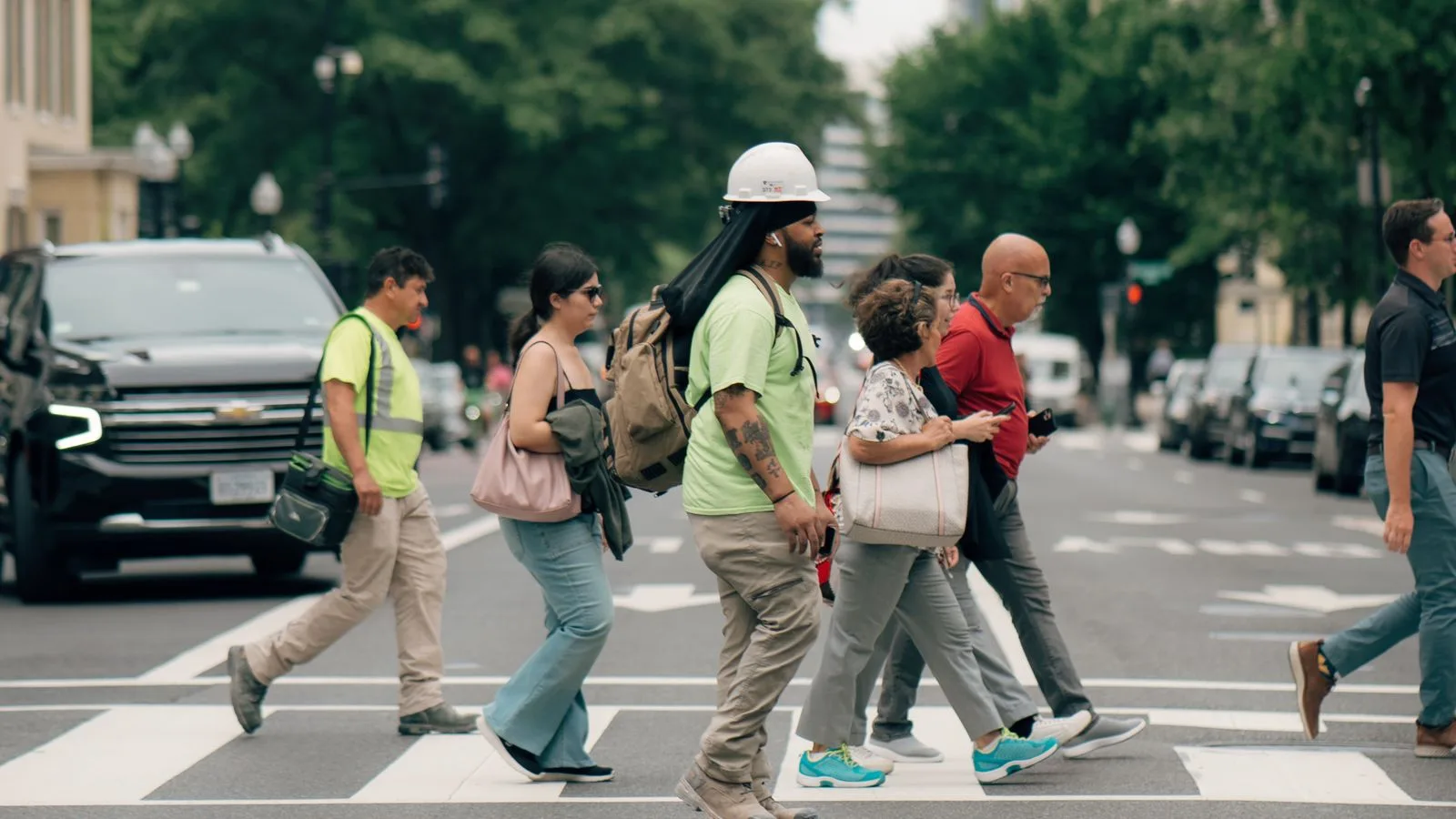
Leander · Pedestrian Accident
Leander Pedestrian Accident Lawyer
A pedestrian or bicycle accident case in Leander involves a motor vehicle striking a person on foot or riding a bicycle on Leander's streets, governed by driver duties under Tex. Transp. Code Ch. 552 for pedestrians and § 551.101 for cyclists, who hold the same rights and duties as motor-vehicle operators. Leander's rapid subdivision build-out east of US-183 has placed pedestrian and bicycle traffic on arterials designed for ranch vehicles, creating a structural mismatch the driver duty of care must fill. These cases file in the Williamson County district courts in Georgetown under the standard two-year limitations period, and a victim's own auto policy PIP and UM/UIM coverage can apply even to crashes where the person was not in a car.
Why Leander cases are different
Leander built subdivisions and a MetroRail terminus onto a road network laid out for ranch traffic, and the gap shows where people walk and ride: the residential arterials east of US-183, the Leander ISD school zones, and the commuter crossings near the rail station all carry foot and bicycle traffic.
Right-of-way at crossings the road network outgrew
Texas law gives a pedestrian in a marked crosswalk or at an intersection the right-of-way, and a driver owes a duty of due care toward anyone on foot or on a bicycle regardless of the marking. In Leander, the friction comes from the rapid build-out: subdivisions east of US-183 generate pedestrian and bicycle traffic on residential arterials, and drivers conditioned to the open ranch roads of a decade ago are slow to adjust to the new volume. Many of these collisions happen at low speed but still cause serious injury, because a person on foot or a bicycle has no protection. We work the available evidence at these crossings, often a doorbell or business camera and the driver's own statement, to establish that the driver failed the lookout and right-of-way duty rather than letting the narrative drift toward blaming the person who was simply walking home.
School zones and the MetroRail commuter crossings
Two Leander settings concentrate pedestrian risk. Around Leander ISD campuses, reduced school-zone speeds and flasher timing create a documented record of what the limit actually was at the moment of a crash, and a driver exceeding the active school-zone speed supports a negligence-per-se argument that strengthens the case. Near the Capital MetroRail terminus, the focused AM and PM commuter windows push foot traffic across US-183-area crossings in tight fifteen-minute surges. A child struck in a school zone or a commuter struck near the station presents a serious-injury claim, and we pull the school-zone flasher logs and the city or TxDOT signal records when timing is in dispute, because that timing often decides the liability question outright.
More in Leander
Other ways we help Leander injury victims.



Frequently asked
Leander pedestrian accident questions
- That is the most common defense in a pedestrian case, and it rarely survives the evidence. A driver owes a duty to keep a proper lookout and yield at crossings, and we use the available cameras, the crossing geometry, and any witnesses to reconstruct where you actually were. On Leander's residential arterials, a doorbell or business camera frequently captures the moment, which can flatly contradict a driver claiming you appeared from nowhere.
- It can strengthen the liability picture. Reduced school-zone speeds and flasher timing produce a record of the actual limit at the time. If the driver was above the school-zone speed during active hours, that supports a negligence-per-se argument. We pull the flasher logs and the city or TxDOT signal records when the timing is disputed, and children are held to a child's standard of care, which limits how much fault a defendant can shift onto them.
- It depends on where and how. If a vehicle struck you on a public street near the station, it is an ordinary negligence claim against the driver. If the injury happened on Capital Metro property or platform, the Texas Tort Claims Act applies, which means a pre-suit notice requirement generally within six months and statutory damage caps. The two paths are built very differently, so the location matters from day one.
- Often, yes. PIP coverage and UM/UIM coverage on your own auto policy typically extend to you as a pedestrian or cyclist, not just when you are inside a vehicle. If the driver who struck you has minimal or no insurance, your own UM/UIM policy can be the primary recovery. We check every household policy at intake, because this coverage is frequently overlooked in pedestrian and bicycle cases.
- Crossing mid-block does not automatically bar your claim. Texas modified comparative fault allows recovery even if you bear some percentage of fault, as long as your share does not exceed fifty percent. A driver still owes a duty of reasonable care and proper lookout regardless of where you cross. We document the available sight lines and traffic conditions to keep your assigned fault percentage accurate rather than inflated.
- Two years from the date of injury under Tex. Civ. Prac. & Rem. Code § 16.003, filing in the Williamson County district courts in Georgetown. If a government entity is involved, such as a city of Leander vehicle or a school district bus, the six-month pre-suit notice requirement under the Texas Tort Claims Act creates an earlier deadline. Children's claims under the statute of limitations may be tolled until age 18, but the governmental-notice deadline is not tolled and must still be met within six months.
Where we work from
Downtown Austin. Leander clients welcome.
Our office is in downtown Austin; we represent Leander-area clients statewide and travel to Leander for case-specific needs (scene visits, medical-records consultations, court appearances). Home and hospital visits when injuries make travel difficult.
Talk to a Leander pedestrian accident lawyer.
Free case review, no obligation. We'll tell you straight whether we can help.