
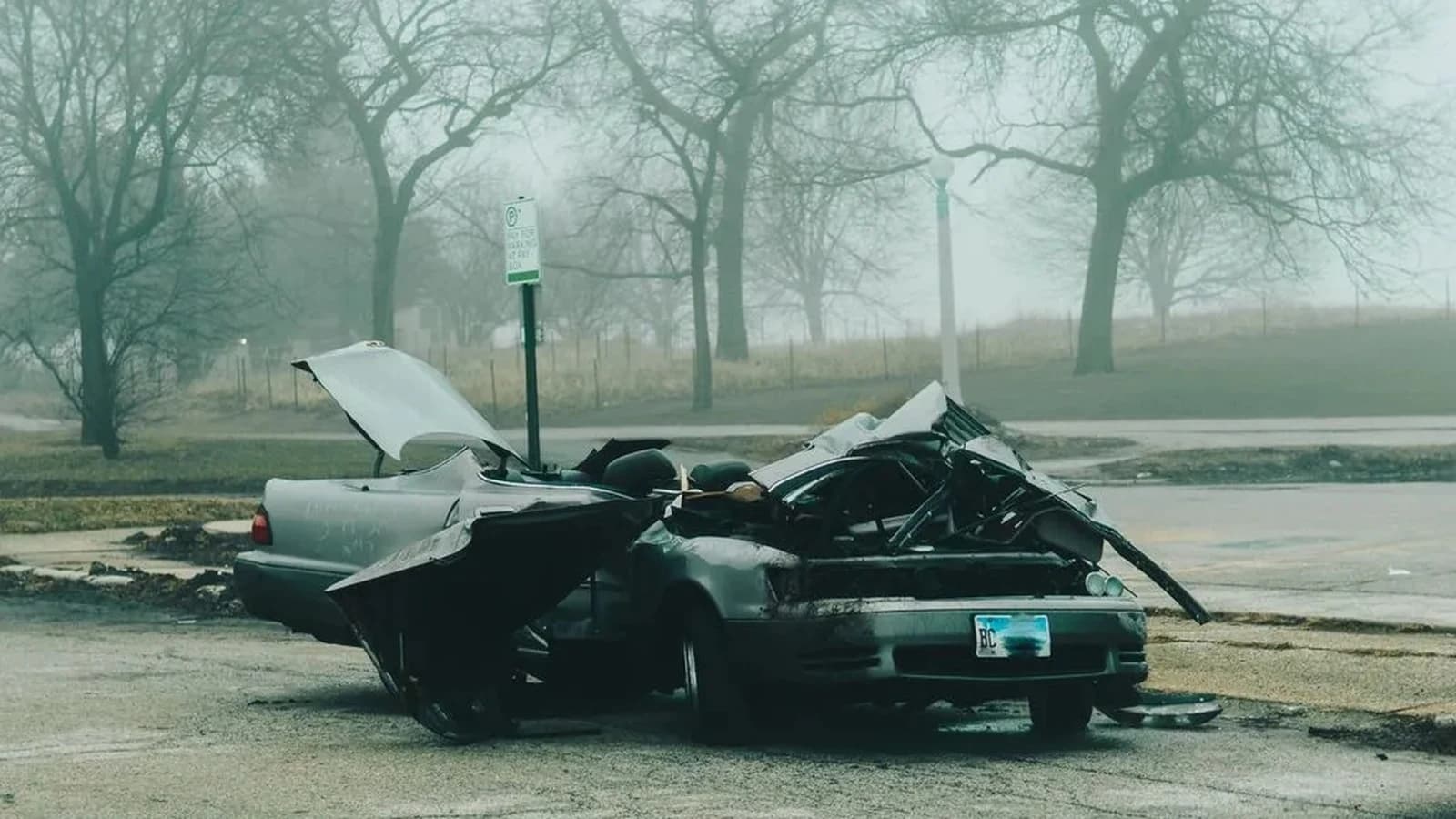
Car accidents · Subcategory
Hit-and-Run Accident Lawyer in Texas
Hit-and-run crashes are collisions where the at-fault driver leaves the scene without identifying themselves or rendering aid as required by Texas law. The driver's flight is itself a criminal offense. Tex. Transp. Code §§ 550.021, 550.022, and 550.023 impose duties to stop, give information, and provide aid. For the injured person, the civil case usually proceeds against the injured person's own uninsured-motorist (UM) coverage while the criminal investigation runs in parallel. The two cases are linked but not identical.
The driver's statutory duty to stop
Tex. Transp. Code § 550.021 requires a driver involved in a crash resulting in injury or death to stop, return to the scene, remain at the scene, and provide reasonable aid. § 550.022 governs crashes involving damage to an occupied vehicle. § 550.023 specifies the information the driver must provide: name, address, registration, insurance, and a driver's license on request. Violation is a criminal offense and the severity grades up to felony levels when injury or death is involved. The flight itself is admissible in the civil case as evidence of consciousness of guilt; juries do not respond well to defendants who left the scene of a serious crash. When we eventually identify the driver, the conduct usually supports a gross-negligence theory for exemplary damages.
UM coverage as the primary civil recovery vehicle
Most hit-and-run cases run through the injured person's own uninsured-motorist (UM) coverage on their auto policy. Texas Insurance Code Chapter 1952, Subchapter A, governs UM/UIM and requires every auto policy issued in the state to include this coverage unless the named insured rejects it in writing. The carrier treats the unidentified driver as 'uninsured' for purposes of the policy, and the claim proceeds against the injured person's own carrier, but it is still an adversarial process. The UM carrier will demand proof of contact (in many policies, a physical impact, though Texas case law on phantom-vehicle UM claims has developed favorably), proof of the at-fault driver's negligence, and proof of damages, all on the same terms as a claim against a third party's policy.
Evidence preservation when the driver is unknown
The first 72 hours after a hit-and-run are the highest-yield investigative window. We push hard on three sources. First, public and private surveillance: gas stations, drive-throughs, ATM cameras, doorbell cameras, and TxDOT and city traffic cameras within a quarter-mile radius of the impact. Second, license-plate-reader data from APD and adjacent agencies, which is available through public-records requests and sometimes through subpoena. Third, physical-evidence recovery from the scene: paint transfer on the client's vehicle, broken trim or headlight fragments left behind, and tire marks that can sometimes be matched to a specific vehicle type. We have identified hit-and-run drivers from a single piece of broken grille trim matched to a make and model and then to a regional vehicle registration list.
Parallel criminal and civil tracks
When the driver is identified, the criminal case under Chapter 550 of the Transportation Code proceeds independently of the civil claim. The criminal process can be useful to the civil case — police investigation generates witness statements, vehicle inspection records, and (sometimes) statements from the at-fault driver — but it can also slow things down because the driver's criminal defense counsel may direct them not to give civil discovery while the criminal case is open. We coordinate where useful and proceed independently where necessary. UM coverage remains available even after the at-fault driver is identified if their personal coverage is inadequate, because identification turns the case from UM into a UIM (underinsured-motorist) posture rather than removing the carrier from the file.



Frequently asked
Questions Texas accident victims ask us
- Stay at the scene and call 911. Write down everything you remember about the other vehicle: make, model, color, partial plate, direction of travel, any visible damage. Photograph the scene, your vehicle's damage, and any debris left behind by the other vehicle. Talk to witnesses and get their contact information. Get medical evaluation even if you feel fine. Notify your insurance carrier within the timeframe your policy requires (usually as soon as practicable). All of this preserves the evidence needed for both the criminal investigation and the UM claim.
- Yes. Tex. Transp. Code §§ 550.021, 550.022, and 550.023 impose duties to stop at the scene, provide identifying and insurance information, and render reasonable aid when injury occurs. Failure to comply is a criminal offense, and the severity escalates with the severity of the resulting injury; leaving the scene of a crash causing serious bodily injury or death is a felony. The flight is also admissible in the civil case as evidence of fault and consciousness of guilt.
- Your own uninsured-motorist (UM) coverage, under Texas Insurance Code Chapter 1952. UM coverage is required to be offered on every Texas auto policy and is included unless the named insured rejected it in writing. The UM carrier steps into the shoes of the unidentified at-fault driver, and the claim proceeds against your own policy on the same factual showing you would make against an identified driver: proof of negligence and proof of damages.
- Texas law generally prohibits a carrier from raising rates or non-renewing a policy based on a not-at-fault UM claim. The carrier evaluates rate impact based on whether the insured was at fault for the underlying crash, not on whether they made a claim. That said, the rules around carrier conduct in UM claims have nuance, and we have seen carriers attempt indirect penalties; pay close attention to renewal notices and document any change in writing.
- Through license-plate-reader data from APD and adjacent agencies, public and private surveillance footage from cameras along the driver's likely escape route, witness descriptions of the vehicle and driver, physical evidence left at the scene (paint transfer, trim fragments, headlight pieces), and increasingly through social-media and dashcam footage from passing vehicles. The window is highest-yield in the first 48 to 72 hours.
- Yes. Identification of the driver opens a personal-injury suit against them and their auto carrier, in addition to any UM coverage available through your own policy. If the at-fault driver's personal coverage is inadequate to cover the damages, the case becomes a UIM (underinsured) claim against your own UM/UIM coverage as a secondary layer. Identification also opens the door to gross-negligence and exemplary-damages theories based on the flight itself.
- You still have UM coverage if you carry a Texas auto policy with UM benefits. UM coverage typically extends to the named insured and household resident family members regardless of whether they were in a vehicle at the time of injury. If you do not carry your own auto policy, your household members' policies may still apply if you are a resident relative. Pedestrian and cyclist hit-and-runs are also high-priority for APD and DPS investigation because of the underlying injury severity.
- The personal-injury limitations period is two years under Tex. Civ. Prac. & Rem. Code § 16.003. UM claims also have a contractual notice requirement under most policies — typically prompt notice as soon as practicable — and failure to give timely notice can become a coverage defense for the carrier. Notify the carrier of a hit-and-run within days, even before all the medical details are known. The formal claim and any litigation can follow on a longer timeline.
Let's talk about your case.
Free case review, no obligation. We'll tell you straight whether we can help.