
Bryan · Pedestrian Accident
Bryan Pedestrian Accident Lawyer
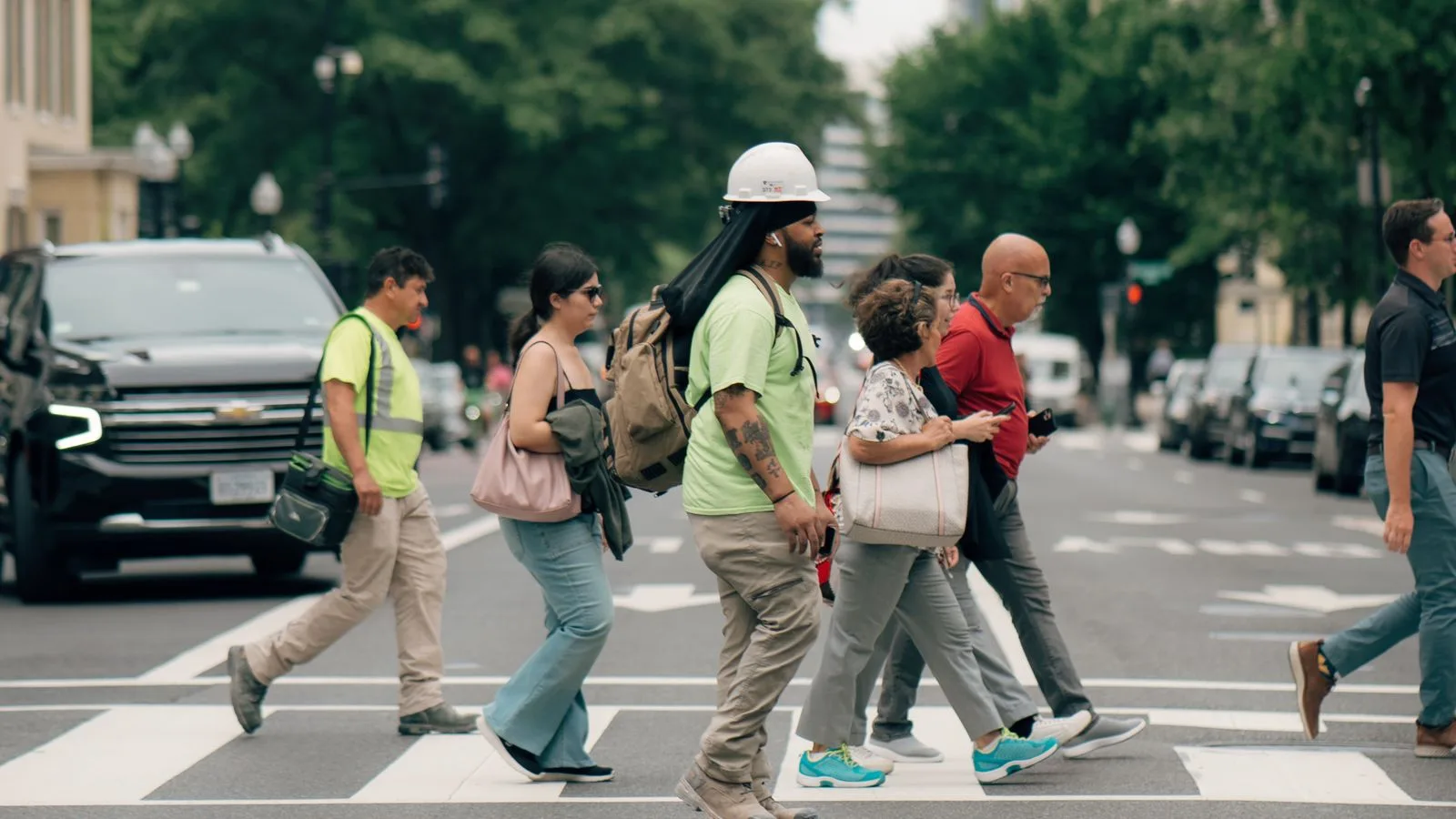
A pedestrian and bicycle accident claim in Bryan arises under Texas Transportation Code Chapter 552 when a motor vehicle strikes a person on foot or a cyclist on the city's street grid: along Texas Avenue, the residential streets of the older Bryan neighborhoods, or the corridors feeding the CHI St. Joseph Regional campus on FM-1179. Drivers owe pedestrians in marked and unmarked crosswalks the right-of-way, and a bicyclist operating on a Bryan road has the same rights and duties as a motor-vehicle driver under Tex. Transp. Code § 551.101. Injuries from these strikes are severe because a person on foot or a bike absorbs the full impact, and the modified comparative fault rules of Chapter 33 still apply, meaning an insurer will argue the pedestrian or cyclist shared blame even when a driver ran a red light.
Why Bryan cases are different
Bryan's denser residential street grid and the historic downtown along Texas Avenue put more people on foot and on bikes than its twin city to the south, and that exposure shows up as low-speed urban collisions, crosswalk incidents, and parking-lot impacts near the older commercial districts.
Right-of-way and driver inattention on Bryan's grid
Most pedestrian and bicycle injuries in Bryan come down to right-of-way and a driver who simply was not looking: a turn across a crosswalk, a roll-through at a downtown intersection, a backing vehicle in a parking lot near the older Texas Avenue commercial districts. Texas law gives pedestrians the right-of-way in marked crosswalks and at controlled intersections, and drivers owe a duty to yield and to watch for people outside their vehicle. When a driver violates that duty, fault is usually clear, but the insurer will still invoke Chapter 33 to argue the pedestrian or cyclist darted out or crossed mid-block to shift blame. The denser the grid, the more these cases turn on the precise geometry of who had the signal and who had the lane. We pin that down with the crash report, witness accounts, and any nearby camera footage before the question becomes a swearing match.
Severe injuries from an unprotected impact
A person on foot or a bicycle has nothing between them and a vehicle, so even a low-speed Texas Avenue impact produces injuries far out of proportion to the speed: fractures, head trauma, and internal injury are routine where a car-to-car version would be a fender-bender. Serious pedestrian and bicycle trauma in Bryan routes to CHI St. Joseph Regional on East 29th Street, with the most severe cases sometimes flown to a Level I center in Houston or Temple. The documentation problem is acute here: the fast ER pattern captures a contusion or strain at discharge, while the fracture or head-injury picture sharpens at the week-two follow-up, and the adjuster anchors to the early note. We push for appropriate diagnostics so the record reflects the real injury before any demand is built, rather than the incomplete first impression.


Frequently asked
Bryan pedestrian accident questions
- Texas gives pedestrians the right-of-way in marked crosswalks and at controlled intersections, so a driver who fails to yield is usually at fault. The insurer may still argue under Chapter 33 that you entered against the signal or crossed mid-block. We lock down the right-of-way question early with the crash report, witnesses, and any nearby camera footage so blame is not simply assumed.
- Often yes. A pedestrian or cyclist has no protection, so a low-speed impact on the Texas Avenue grid can still cause fractures, head trauma, or internal injury. Those injuries can carry real medical costs and lasting effects. The value of a claim turns on the harm done, not the speed of the vehicle, which is why we document the full injury picture.
- It can. Uninsured and underinsured motorist coverage and medical-payments coverage on your own auto policy frequently apply when you are struck as a pedestrian or cyclist, including in a hit-and-run on the older downtown grid. We review your declarations page at intake to identify every coverage that might respond, not just the driver's liability policy.
- It can. The FM-1179 corridor and the residential streets feeding the CHI St. Joseph Regional hospital campus see concentrated left-turn and pedestrian-path crossing traffic during shift-change windows. That pattern makes the location and time of day relevant to the liability picture. We document the site conditions and identify any nearby cameras before the footage is overwritten.
- Not necessarily. Under Chapter 33 you can still recover as long as your fault share is 50 percent or less. A bicyclist who contributed to a crash does not automatically lose the case; the driver's fault still counts. We evaluate the specific facts of where each party was, what each could see, and what each failed to do before any fault percentage is accepted.
- Yes. If the driver was operating a vehicle in furtherance of their employer's business — a delivery route, a service call, a work errand — the employer is potentially liable under respondeat superior. Commercial auto policies and any umbrella layer come into play alongside the driver's own coverage. We identify the employer relationship and any commercial coverage at intake.
Where we work from
Downtown Austin. Bryan clients welcome.
Our office is in downtown Austin; we represent Bryan-area clients statewide and travel to Bryan for case-specific needs (scene visits, medical-records consultations, court appearances). Home and hospital visits when injuries make travel difficult.
Talk to a Bryan pedestrian accident lawyer.
Free case review, no obligation. We'll tell you straight whether we can help.